Preparing for surgery? Learn how prehab before surgery and post-surgical physical therapy can help improve strength, mobility, confidence, and recovery.

Physical Therapy Before & After Surgery | Prehab & Recovery
read more

Preparing for surgery? Learn how prehab before surgery and post-surgical physical therapy can help improve strength, mobility, confidence, and recovery.

Physical Therapy can help at all stages of life from childhood, puberty, into adulthood and beyond proper movement improves overall wellness.
Have a free discovery call to talk with one of our therapists.
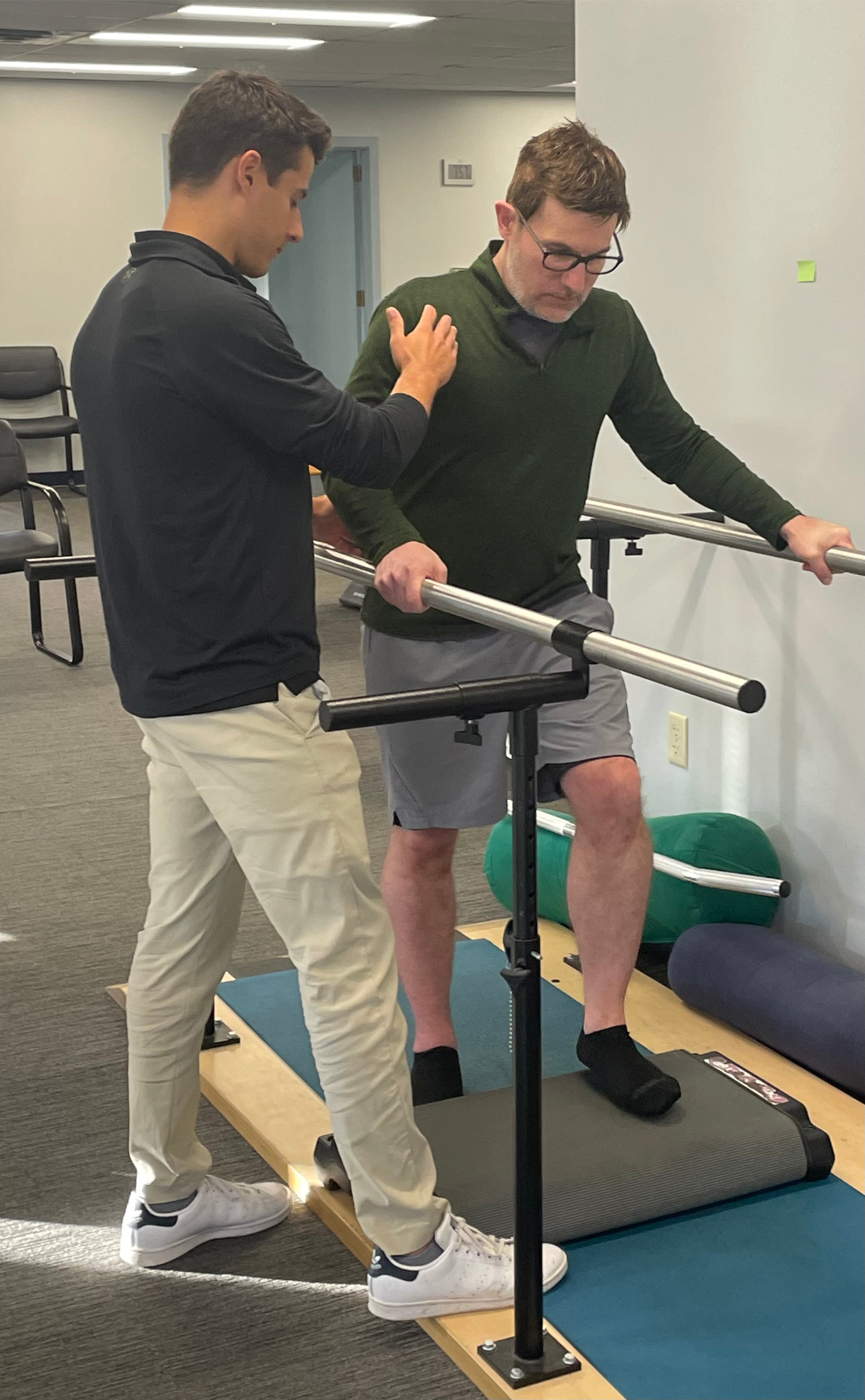
Do you ever feel unsteady when walking, dizzy when standing up, or worried about falling? Balance problems can affect people of all ages—not just older adults—and can make everyday activities more difficult and even dangerous.
The good news is that physical therapy for balance problems is one of the most effective ways to improve stability, reduce your risk of falls, and help you move with confidence again.
Good balance allows you to stay upright, walk safely, and confidently participate in everyday activities. Your balance depends on several systems working together, including:
When one or more of these systems isn’t functioning properly, you may experience dizziness, unsteadiness, or difficulty walking. These symptoms can increase your risk of falls and reduce your independence.
Many people assume balance issues are simply part of getting older, but there are many possible causes, including:
Weak leg and core muscles can make it difficult to stay stable while standing, walking, or climbing stairs.
Conditions affecting the inner ear, such as vertigo, labyrinthitis, or Ménière’s disease, can lead to dizziness and poor balance.
An injury to the muscles, ligaments, joints, or bones—especially in the lower body—can affect your ability to maintain balance.
As we age, natural changes in strength, reaction time, vision, and coordination can increase fall risk.
Conditions such as Parkinson’s disease, multiple sclerosis (MS), and stroke may affect the brain’s ability to process balance information.
You may benefit from a balance assessment if you:
Improving your balance isn’t just about preventing falls—it’s about improving your overall quality of life.
Better balance can help you:
Research has even shown that walking speed is closely associated with overall health and longevity, making balance training an important part of healthy aging.
Every person experiences balance problems differently, which is why physical therapy begins with a comprehensive evaluation. Your physical therapist will assess your:
Using this information, they’ll develop a personalized treatment plan designed specifically for your needs.
Building strength in the legs and core improves stability and helps your body react more effectively to changes in position.
If your dizziness or balance issues stem from the inner ear, vestibular rehabilitation therapy uses specialized exercises to retrain the brain to process balance signals more effectively.
Proprioception is your body’s awareness of where it is in space. Physical therapists use exercises like single-leg standing, balance pads, and uneven surfaces to improve coordination and stability.
Walking safely and efficiently requires good balance. Physical therapists help improve walking mechanics and may recommend assistive devices when appropriate to increase safety.
For individuals at higher risk, physical therapists provide education on home safety, reaction time, recovery strategies, and practical ways to reduce the risk of falls.
Many people believe balance problems are simply something they have to live with. In reality, balance therapy can significantly improve stability, confidence, and independence.
Whether your symptoms are caused by aging, an injury, vertigo, or another medical condition, physical therapy can help you regain control and get back to the activities you enjoy.
If you’re experiencing dizziness, unsteadiness, or have concerns about falling, don’t wait until an injury occurs.
Our licensed physical therapists provide comprehensive balance evaluations and personalized treatment plans to help you move safely and confidently.
Contact Elite Therapy Solutions today to schedule your balance assessment and take the first step toward better balance and a healthier, more active life.