Physical therapy can help resolve migraines and headaches

From Head to Toe
read more

Physical therapy can help resolve migraines and headaches
Have a free discovery call to talk with one of our therapists.
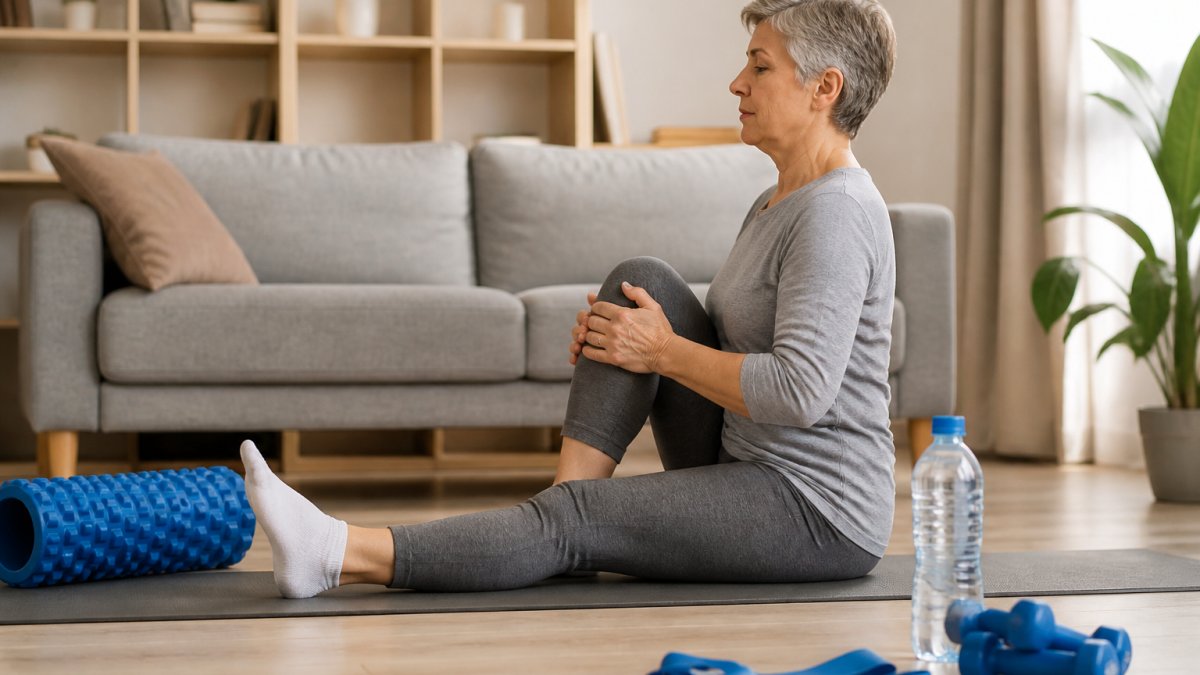
Last Updated: September 28, 2026
Joints need movement to stay healthy: cartilage gets nutrients, synovial fluid circulates, and stiffness drops. Stop moving, and the opposite happens fast.
The best exercises for joint pain are low-impact, gentle on cartilage, and easy to scale up or down. These seven options build strength, improve flexibility, or boost aerobic capacity without pounding your joints.
Water takes pressure off your joints while still giving you resistance. Buoyancy offsets much of your body weight, so movements that hurt on land often feel fine in the pool, and warm water relaxes surrounding muscles to ease stiffness.
Try this:
A stationary bike works your legs without impact, and you control the resistance. Cycling also moves the knee and hip through a large arc of motion, keeping synovial fluid circulating.
Tai chi combines slow movement, deep breathing, and balance work. Many people with joint pain find it helps with stiffness and flexibility, and the slow pace makes it easy to stop if something flares.
Isometric exercises build strength without moving the joint: you contract the muscle and hold, which means less stress on cartilage and less irritation of an inflamed joint. They’re a good entry point when even light movement hurts.
Examples:
A strong core protects your back, hips, and knees. Core stability training targets the muscles that keep you steady, so your joints don’t absorb every wobble.
Try:
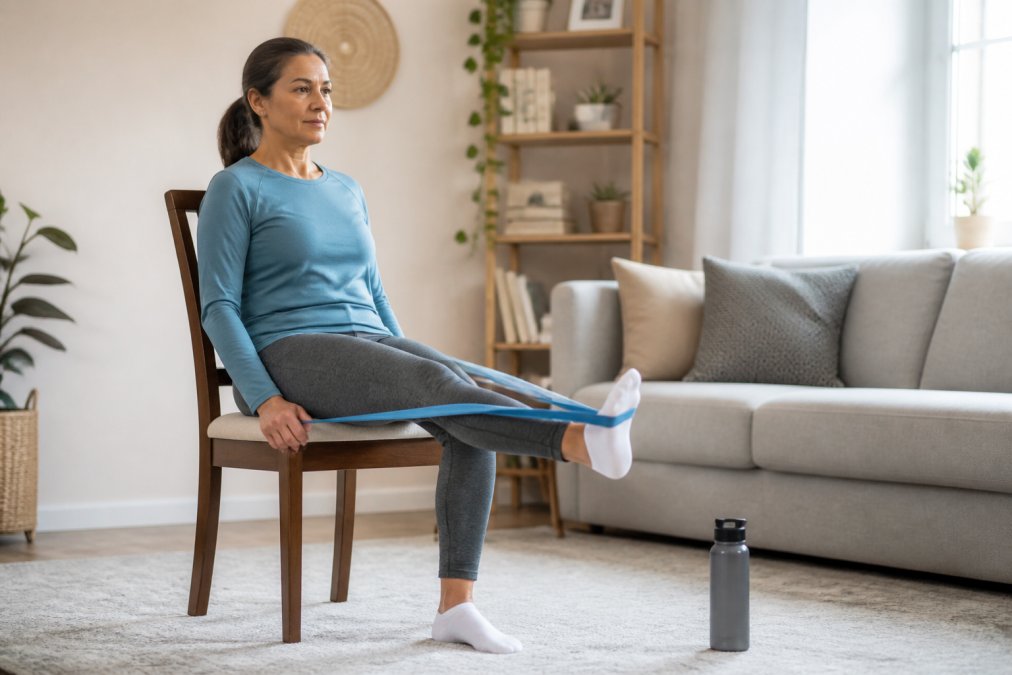
Light resistance training helps maintain bone density and muscle mass. Bands are a good starting point: you control the tension, and they’re cheap and portable.
Walking and elliptical machines build aerobic capacity without running’s impact. Both help with weight management, which takes load off your joints, every pound lost removes several pounds of force from the knees during walking.
| Exercise | Best For | Time to Start | Frequency |
|---|---|---|---|
| Water exercise | Arthritis, stiffness | 10-20 min | 2-3x per week |
| Stationary cycling | Knee, hip pain | 5-10 min | 3-4x per week |
| Tai chi | Flexibility, balance | 10-15 min | Daily |
| Isometrics | Strength, low strain | 5-10 min | 3x per week |
| Core training | Back, hip support | 5-10 min | 3x per week |
| Resistance bands | Muscle, bone density | 10-15 min | 2-3x per week |
| Walking/elliptical | Aerobic capacity | 10-30 min | Most days |
How you recover between sessions matters as much as the sessions. A simple protocol:
Low-impact exercises for arthritis focus on joint mobility, flexibility, and strength without pounding the joints. The CDC’s physical activity guidance for arthritis recommends low-impact options like walking, swimming, and cycling.
Prioritize these three things:
Learning how to exercise with joint pain safely starts with a proper warm-up, good form, and a cool-down. Skip any of these and you raise your risk of a flare-up: cold, stiff tissue tolerates load poorly, and an inflamed joint has less margin before a longer recovery.
Warm-up (5 minutes):
During exercise:
Cool-down (5 minutes):
Most practitioners use a simple 0-10 scale to decide whether to keep going, modify, or stop:
Some days a joint just won’t cooperate. On those days:
Physical therapy for joint pain helps when self-guided exercise isn’t enough. A therapist assesses your gait, strength, and joint mobility, then builds a plan for your needs.
Signs it’s time to see a professional:
Fear of movement is real and can keep you stuck. Many people with chronic pain worry activity will cause re-injury, a common worry called kinesiophobia.
Track these:
Joint pain can make movement feel risky, but the right exercises help more than they hurt. Start with low-impact options, warm up, and track your progress.
Water-based exercise, stationary cycling, tai chi, and isometric movements are among the best exercises for joint pain because they build strength and mobility without jarring the joints. Swimming reduces gravity’s load on knees and hips, while tai chi improves balance and range-of-motion. Aim for 20-30 minutes most days, and stop if pain sharpens. A physical therapist can tailor a plan to your specific joints and pain threshold.
Most guidelines suggest 150 minutes of moderate aerobic activity per week, spread across 5 days, plus two sessions of resistance training. For joint stiffness, daily range-of-motion work helps more than occasional long sessions. Start with 10 minutes twice a day and build gradually. If pain flares, scale back duration rather than stopping completely. Consistency matters more than intensity when managing chronic pain.
High-impact activities like running on pavement, deep squats under heavy load, and plyometric jumps can aggravate inflamed joints. Also avoid locking joints at end range or pushing through sharp pain. If you have knee or hip osteoarthritis, skip full-depth lunges and step-ups on high boxes until a therapist clears you. Low-impact alternatives like swimming and cycling deliver similar cardiovascular benefits with less joint stress.
A physical therapist assesses your gait, strength, and joint mobility, then designs a program that targets your weak links. For joint pain, therapy often combines manual techniques, therapeutic exercise, and education on posture and body mechanics. Fellowship-trained doctors of physical therapy can also coordinate with your referring physician. If home exercises stall or pain persists beyond a few weeks, a formal evaluation can identify what’s missing.