Learn how to relieve chronic neck pain with 7 practical steps, from targeted exercises and posture fixes to physical therapy and better sleep habits.

How to Relieve Chronic Neck Pain: 7 Steps That Work
read more

Learn how to relieve chronic neck pain with 7 practical steps, from targeted exercises and posture fixes to physical therapy and better sleep habits.
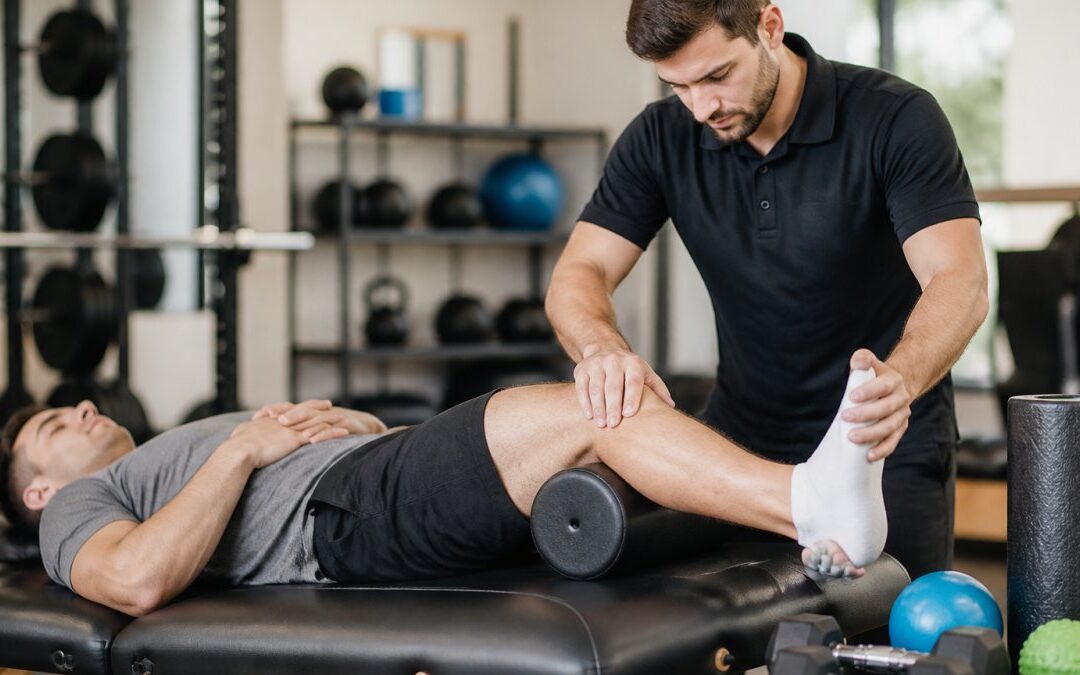
Compare the best physical therapy for athletes on credentials, cost, and return-to-sport testing. Learn how to choose the right provider.
Have a free discovery call to talk with one of our therapists.
Last Updated: October 12, 2026
TMJ dysfunction is pain and loss of normal function in the temporomandibular joint, the hinge connecting your lower jaw to your skull. It affects the muscles that move your jaw, the joint itself, or both.
That matters: a jaw that clicks is not the same as one that locks, and one that aches after chewing differs from one that aches all day.
TMJ stands for temporomandibular joint, the joint itself. TMD stands for temporomandibular disorder, the condition affecting that joint and its muscles.
A movement exam maps how those two joints and their muscles behave together, checking opening width, side-to-side motion, joint sounds, and tenderness. That map separates a real treatment plan from guesswork.
Most people can start easing symptoms at home before their first appointment. These steps work best in order, skipping ahead to strengthening while muscles are still irritated usually makes things worse.
Most guides get this wrong, handing you a full exercise list on day one. Your jaw needs calming first, then movement, then load.
Use moist heat for 10 to 15 minutes to relax tight jaw muscles, then a cold pack for 10 minutes if the area is swollen or freshly irritated. Keep your teeth slightly apart and your tongue resting gently on the roof of your mouth.
Give the joint a break from heavy chewing. Soups, eggs, yogurt, soft pasta, and cooked vegetables reduce load on the joint and its muscles. Cut food into small pieces and chew on both sides evenly.
Rest does not mean clenching your jaw shut. It means letting your lips touch while your teeth stay apart.
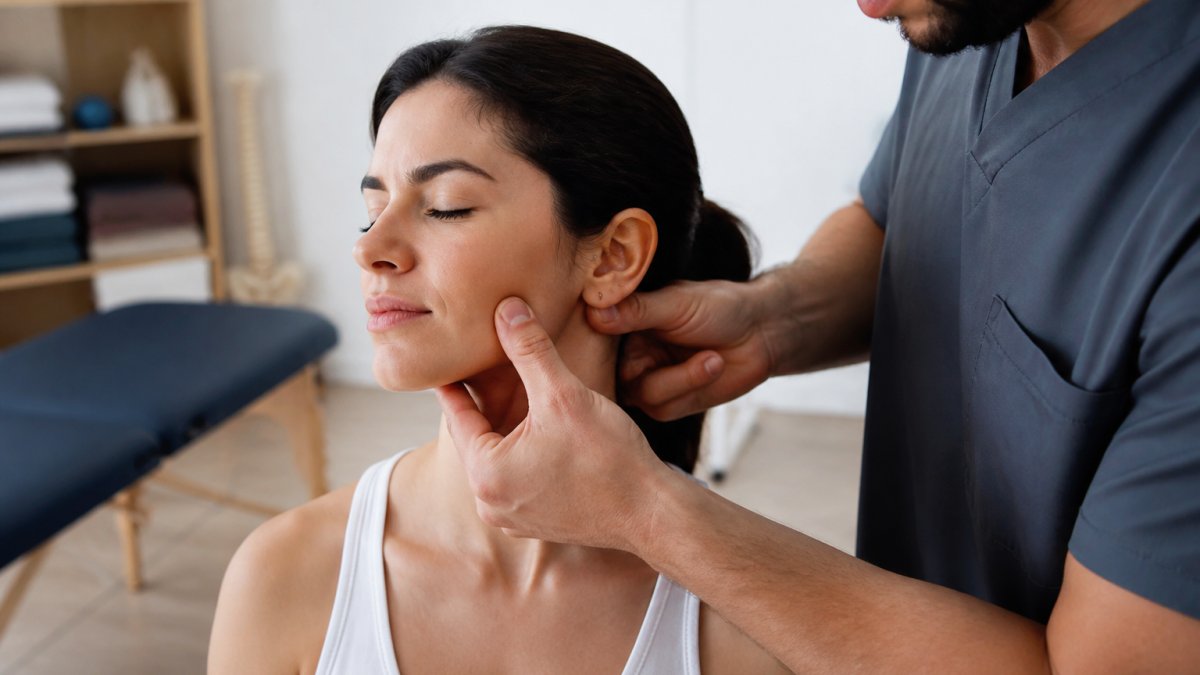
Press two fingers lightly on the muscle just below your cheekbone, in front of your ear. Open and close your mouth slowly while holding gentle pressure.
You can also place a thumb inside your mouth along the lower jaw ridge and apply light downward pressure while opening. Keep it pain-free.
A safe plan moves in two phases. Phase one restores motion and relaxes muscles. Phase two builds strength and control. Most people spend two to four weeks in phase one before adding load.
If sharper pain appears during any exercise, stop and note which movement caused it, that detail helps your physical therapist adjust your plan next visit.
Start with controlled motion, not force, once or twice daily.
Once opening is smoother and pain lower, add gentle resistance.
Neck and posture work belongs here too. A forward head position loads the jaw muscles, so improving neck posture often reduces jaw symptoms.
Manual therapy for the jaw uses skilled hand techniques to reduce muscle tension, improve joint glide, and restore normal motion.

A typical session follows a sequence, not a random set of techniques:
Pushing a joint through a restricted range while surrounding muscles still guard usually provokes symptoms. Releasing muscle tone first, then mobilizing the joint, then retraining movement produces a smoother response and less post-session soreness, which is why a home exercise list rarely matches a hands-on session. (Source: guidelines for physical therapy management of TMD)
Mild soreness for 24 to 48 hours is common and usually fades. Sharp pain, new locking, or swelling is not normal, report it. Some patients notice easier opening the same day, others the next morning; neither pattern predicts long-term outcome alone.
Visit frequency depends on how irritable the joint is. A common pattern is one to two visits per week for the first two to four weeks, then spacing out as home exercises take over more of the load. Manual therapy is a bridge, not a permanent fix.
What most people miss is that the jaw does not work in isolation. The hyoid muscles, deep neck flexors, and upper trapezius all influence jaw position and load, and a forward head posture increases tension through the jaw-closing muscles. Treating only the jaw while ignoring the neck rarely holds, so we assess and treat both.
Physical therapy for jaw pain starts with a full evaluation, not a template: your first visit covers your history, symptoms, and a hands-on movement exam of the jaw, neck, and posture.
Your therapist will check:
From there, your treatment plan combines manual therapy, exercises, and habit changes.
For general background on temporomandibular disorders, the National Institute of Dental and Craniofacial Research overview of TMD is a solid starting point.
Not all jaw pain is TMD, and most guides skip that. A movement exam and a trial of physical therapy suit mechanical jaw pain, the kind that changes with chewing, talking, or posture, but not symptoms that point somewhere else.
See a physician or dentist promptly, before starting therapy, if you have any of the following:
A useful rule: TMD pain usually fluctuates with use. It is worse after chewing, better after rest, and it changes day to day. Pain that is constant, progressive, or unrelated to jaw use deserves a closer look.
For typical TMD, most people notice less pain and easier movement within two to six weeks of consistent care. Full improvement often takes longer, three to six months is not unusual for long-standing cases. Progress is not a straight line. Flare-ups happen, especially with stress or heavy chewing, and a bad day does not mean the plan is failing.
Factors that tend to slow recovery:
Factors that tend to speed it up:
We measure progress with simple, repeatable checks, the same ones at every visit, so change is visible:
| What We Measure | How We Check It | What Progress Looks Like |
|---|---|---|
| Opening width | Measured in millimeters | Steady increase over weeks |
| Pain level | 0-10 rating at rest and with chewing | Lower scores, fewer spikes |
| Joint sounds | Listen and feel during movement | Fewer or softer sounds |
| Jaw function | Chewing, talking, yawning | Easier with daily tasks |
| Neck mobility | Turn and tilt range | Smoother, less guarded motion |
| Chewing tolerance | Minutes of comfortable chewing | Longer before fatigue or pain |
Track these yourself between visits. A simple log of opening width, pain score, and what you were doing when pain spiked gives your therapist more useful information than any single exam finding.
Many people improve a lot with therapy. Some need dental treatment alongside it, a bite guard, occlusal adjustment, or treatment for sleep-related grinding. A few have ongoing symptoms needing long-term management rather than resolution.
The American Academy of Physical Therapy Association resources on musculoskeletal care offers more on what physical therapy can and cannot do for joint and muscle conditions.
Jaw pain that drags on for months wears you down, changing how you eat, sleep, and show up at work. You do not have to accept it as permanent.
At Elite Therapy Solutions, our fellowship-trained doctors of physical therapy build personalized plans for TMJ and jaw pain. If you are ready to stop guessing and start a plan that fits your jaw, book an appointment with Elite Therapy Solutions and get moving toward a jaw that works with you again.
Start with heat or cold therapy for 15 to 20 minutes at a time, then rest the jaw by choosing soft foods and avoiding gum or hard chewing. Gentle self-release, where you press on tight jaw muscles with clean fingers, can ease muscle tension. A physical therapist can build a progressive plan so home relief supports, rather than replaces, guided care.
Physical therapists often teach controlled jaw opening, gentle side-to-side movements, and relaxed closing patterns. Tongue-to-palate holds and resisted opening with light finger pressure can improve jaw mobility without straining the joint. A therapist tailors the exercises to your range of motion and symptoms, so the plan stays safe for your specific TMJ dysfunction.
Many people notice less pain and easier jaw movement within a few weeks of starting consistent physical therapy for TMJ dysfunction. Full progress varies with how long symptoms have been present, how well you keep up with home exercises, and whether other providers are involved. Your therapist will track range of motion and function at each visit to show whether the plan is working.
A session usually starts with an evaluation of your jaw movement, muscle tenderness, posture, and neck. Treatment may include manual therapy, joint mobilization, soft-tissue work, therapeutic exercise, and modalities such as heat or electrical stimulation. Your physical therapist also coordinates with your dentist or physician when needed, then gives you a home program to maintain gains between visits.