Learn how to relieve chronic neck pain with 7 practical steps, from targeted exercises and posture fixes to physical therapy and better sleep habits.

How to Relieve Chronic Neck Pain: 7 Steps That Work
read more

Learn how to relieve chronic neck pain with 7 practical steps, from targeted exercises and posture fixes to physical therapy and better sleep habits.

Discover the best exercises for joint pain, from low-impact moves to physical therapy routines. Learn how to exercise safely and start feeling better.
Have a free discovery call to talk with one of our therapists.
Last Updated: October 5, 2026
The best physical therapy for athletes is built around sport-specific testing, not general rehab routines. At Elite Therapy Solutions, our fellowship-trained doctors of physical therapy treat the athlete, not just the injury.
Generic clinics treat pain. Sports physical therapy treats the demands of your sport.
Athletes ask their bodies for more than daily life does: sprinting, cutting, jumping, landing, and absorbing contact. That gap matters.
A person who wants to climb stairs without pain has a different finish line than a competitive athlete who needs to sprint, decelerate, and change direction at full speed. Physical therapy for athletes has to restore strength, power, endurance, balance, and range of motion to the level the sport requires, not just to the level of comfortable walking.
Find the root cause, then build the plan around it.
Evaluating a sports physical therapist comes down to three things: verified credentials, experience with your specific sport, and a plan you can see and measure. Ask for all three before you commit to a treatment plan.
A sports physical therapist is a licensed physical therapist with advanced training in athletic injury assessment, rehabilitation, and return-to-sport testing. The letters after a name matter less than what they mean.
Look for:
At Elite Therapy Solutions, our team includes fellowship-trained doctors of physical therapy. We also collaborate directly with referring physicians, so your care stays connected to the rest of your medical team.
The right match depends on your sport, your injury, and your goals. A therapist who mainly treats post-surgical knees may not be the best fit for a throwing athlete with shoulder pain.
Use this quick screen before you book:
| What to Check | Strong Sign | Weak Sign |
|---|---|---|
| Sport experience | Treats athletes in your sport regularly | General rehab only |
| Assessment style | Full movement assessment first visit | Treats the sore spot only |
| Plan clarity | Written goals and timelines | Vague “we’ll see how it goes” |
| Testing | Objective return-to-sport criteria | Clears you by feel alone |
| Communication | Loops in your doctor or coach | Works in isolation |
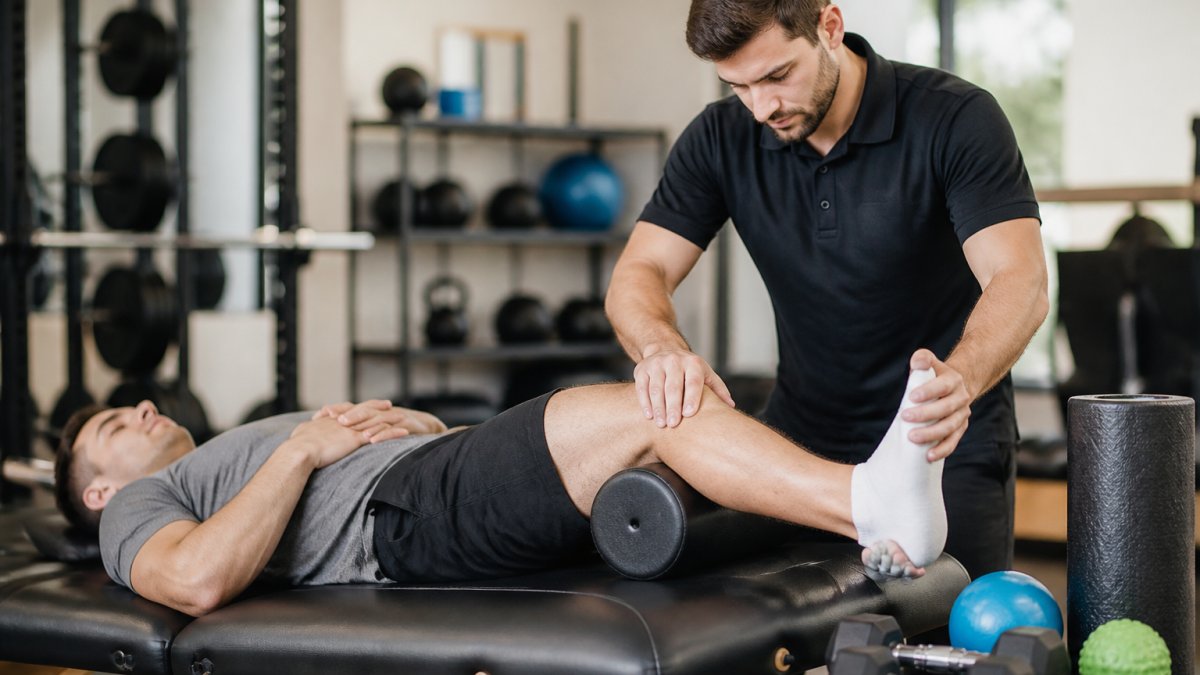
Physical therapy for sports injuries combines hands-on treatment, targeted exercise, and progressive loading. The goal is pain-free movement first, then strength, then sport-specific training.
A typical plan moves through stages:
Manual therapy, functional exercise, and education all play a role. The mix changes as you progress.
Return to sport physical therapy uses objective testing to confirm you are ready, not just pain-free. Feeling better and being ready are two different things.
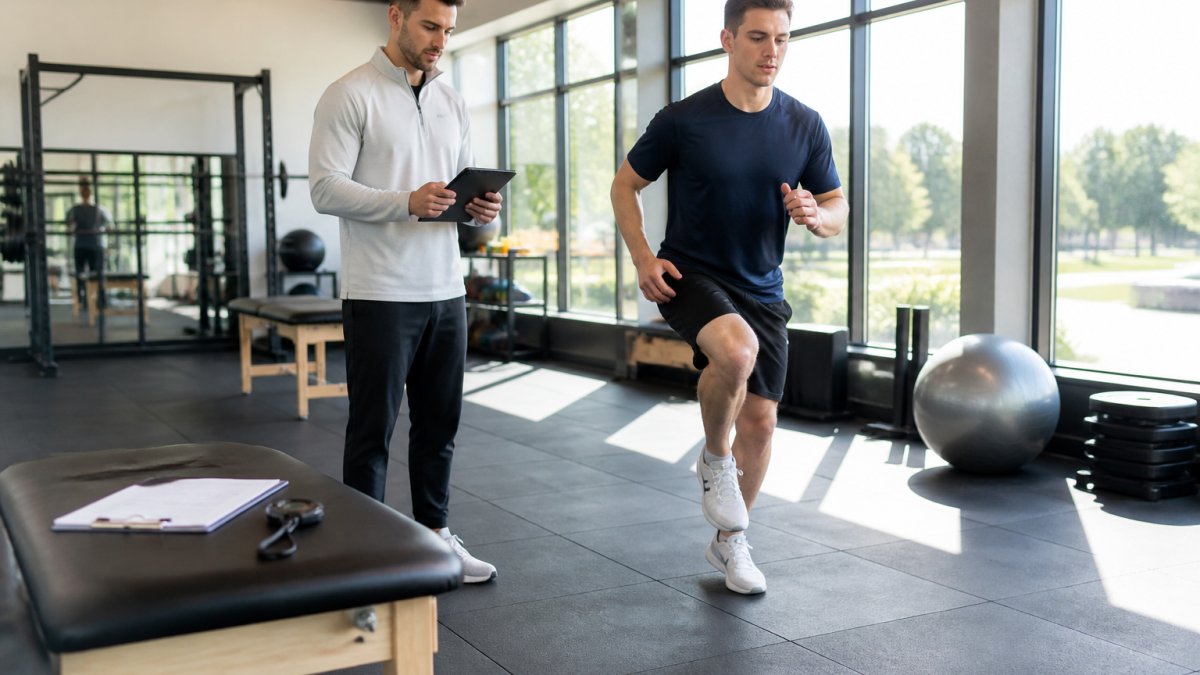
Pain fades before tissue is ready for full-speed loading. A healing hamstring, ACL graft, or rotator cuff can feel fine during daily activity while still lacking the strength, rate of force development, and neuromuscular control needed for sprinting, cutting, or throwing.
That is why return-to-sport decisions should be driven by a battery of measures, not a single test or a gut feeling.
No single test clears an athlete. We compare the injured side to the healthy side and track the gap over time. A common benchmark across the sports-medicine literature is a limb symmetry index (LSI) of at least 90% on strength and hop testing before progressing to full competition.
A common pattern is that athletes pass hop testing before they pass strength testing, or vice versa. When the two disagree, we hold the athlete back and target the weaker measure. A 92% single-leg hop with an 82% quadriceps strength deficit is not a green light, it is a strength problem wearing a hop-test disguise. (Source: evidence-based practice guidelines for sports physical therapy)
We also re-test at defined intervals so progress is visible and the plan can adjust.
Passing the lab tests is necessary but not sufficient. The last stage is full-effort sport-specific work, reactive cutting, uncontrolled deceleration, live throwing, or contact, performed without compensation. Only when an athlete clears both the objective battery and the sport-specific demands do we sign off on return to competition.
A common mistake is returning to competition because pain faded. Pain-free movement is the start of the return-to-sport conversation, not the end of it.
Sports rehab exercises build from basic movement to full-speed sport demands. The program should get harder as you get stronger, not stay the same week after week.
A progressive plan typically includes:
The exact exercises depend on your injury and your sport. A soccer player’s program looks different from a swimmer’s, even with similar injuries.
What athletes pay for physical therapy depends on their insurance plan, deductible, and whether the provider is in network. Costs vary widely by plan and location, so we won’t quote a number that may not apply to you. What we can do is show you exactly how the billing works so there are no surprises.
1. In-network with a physician referral. Most plans cover physical therapy as a covered benefit. You pay your copay or coinsurance per visit until you hit your deductible, then a lower cost-share applies.
2. In-network without a referral. Some plans allow direct access to physical therapy; others require a physician referral for coverage.
3. Out-of-network or self-pay. You pay the full rate depending on the clinic, the therapist’s credentials, and the length of the session.
Call the member services number on the back of your card and ask specifically:
Write down the reference number and the name of the representative you spoke with. If a claim is later denied, that record is your first line of appeal.
Not all physical therapy visits cost the same. The main variables are:
For current pricing and insurance questions, contact Elite Therapy Solutions directly. Our team will walk you through your options before you commit to a plan.
Start with credentials: a fellowship-trained doctor of physical therapy or a therapist holding a sports clinical specialization has advanced training beyond a general license. Ask whether the clinic performs a root-cause assessment rather than only treating the sore spot, whether it uses objective return-to-sport testing such as strength and hop comparisons, and whether it treats athletes in your sport regularly. Also confirm appointment length and whether you see the same therapist each visit. These factors matter more than a clinic’s size or marketing.
Sports physical therapy for athletes builds a structured path from pain relief to full competition readiness. Early sessions focus on reducing pain and restoring range of motion, then progress to strength rebuilding and functional exercise. Before clearance, a good program runs objective testing, comparing injured and healthy sides on strength, balance, and sport-specific movements. This staged approach reduces the risk of returning too soon, which is one of the most common causes of reinjury in competitive athletes.
Yes. A movement assessment often reveals limitations such as restricted ankle mobility or weak hip stabilizers that cap performance even without an active injury. Correcting those issues through targeted strength training and conditioning can improve agility, balance, and power output. Many athletes use physical therapy during the offseason for exactly this reason. The same testing used for return-to-sport decisions can establish a baseline and track whether training is actually moving your numbers.
All sports physical therapists are licensed physical therapists, but not all physical therapists focus on athletes. A sports physical therapist typically holds additional certification or residency training in sports rehabilitation and works regularly with competitive athletes. That matters because return-to-sport decisions require sport-specific testing and an understanding of training demands, competition schedules, and reinjury risk. If your goal is getting back to a sport rather than basic daily mobility, ask directly about the therapist’s athlete caseload and sports credentials.
Getting back to your sport takes more than a generic exercise sheet. Elite Therapy Solutions offers fellowship-trained doctors of physical therapy, personalized treatment plans, and direct collaboration with your referring doctor, all built around objective return-to-sport testing. Book an appointment with Elite Therapy Solutions and get a plan designed for your sport, your injury, and your goals.